

QorusDocs vs. Loopio: Which Proposal Management Platform Is Right for Your Team?
Professional Services organizations compete in one of the most demanding proposal environments out there. Teams juggle proactive proposals, formal RFPs, and the occasional last-minute “can we turn this around by Friday?” request, all while coordinating input from delivery leaders, SMEs, and client-facing executives.
Workloads are significant and can vary from week-to-week. Some weeks are manageable. Others not so much. Proposal and RFP opportunities shift with market conditions and client priorities, and proposal teams must be able to respond quickly with a solution tailored to the client.
The recent 10th Annual Proposal Management Survey highlights how proposals and RFPs also carry substantial revenue implications, with a large share of new and existing business flowing through formal response processes. This combination of revenue exposure, workload variability, and rising expectations for personalization creates a uniquely demanding environment for proposal teams.
Let’s dig into some of the most important trends shaping proposal work in Professional Services today.
-
Proposal Volume Is Only Part of the Workload Story
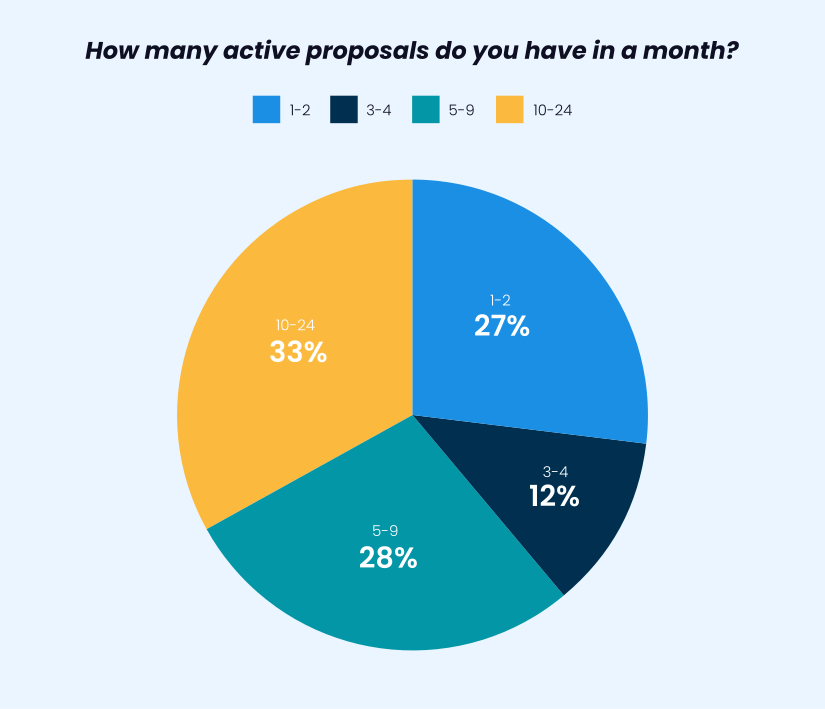
Proposal volumes in Professional Services tend to be steady, but not exactly smooth. One-third of respondents report handling 10–24 proactive proposals per month, while another 28% manage between 5–9.
Proposal pressure in Professional Services is not just a volume story. It is also a time story. Across the benchmark, 51% of respondents say an average request takes 6–10 days to complete, and the Professional Services sector matches this exactly. However, timelines often stretch 20+ days for Professional Service teams, most likely due to customization and coordination demands.
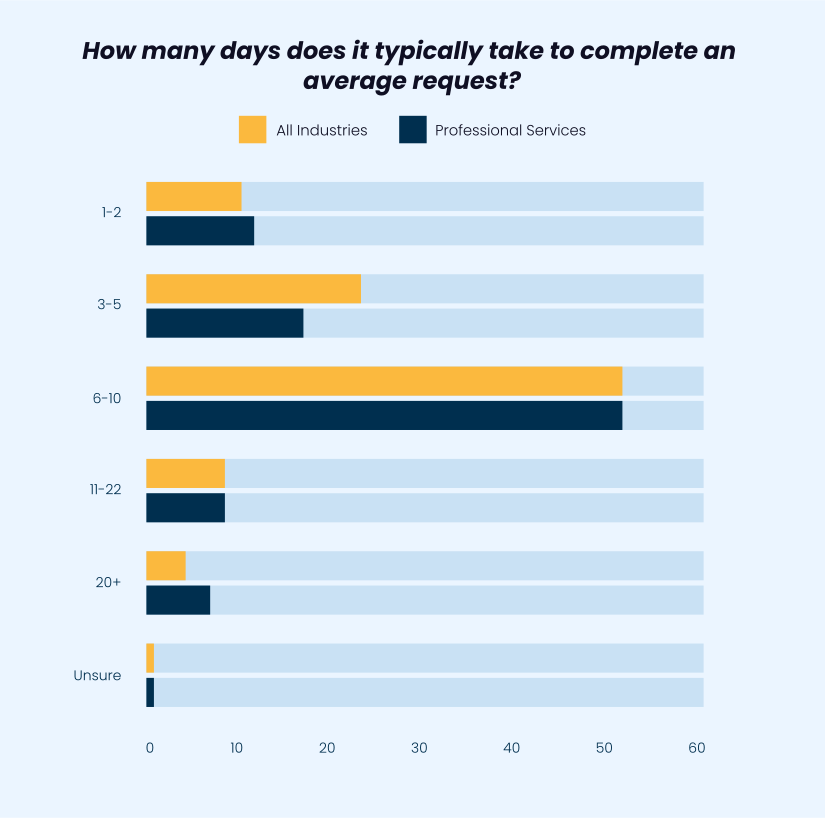
Even moderate proposal volumes can quickly strain capacity when each response requires several days of drafting, coordination, and review. When multiple pursuits arrive at once, the challenge is rarely just writing the proposal. It is coordinating contributors, gathering input, and maintaining quality under tight timelines. Anyone who has managed a proposal deadline knows the real work often happens in those coordination moments.
Actionable insight: Proposal leaders should focus on reducing the time required to assemble responses. Centralized content, reusable expertise, and clearer contributor workflows can significantly ease pressure when several opportunities land at the same time.
-
Formal Proposals Carry Significant Revenue Exposure
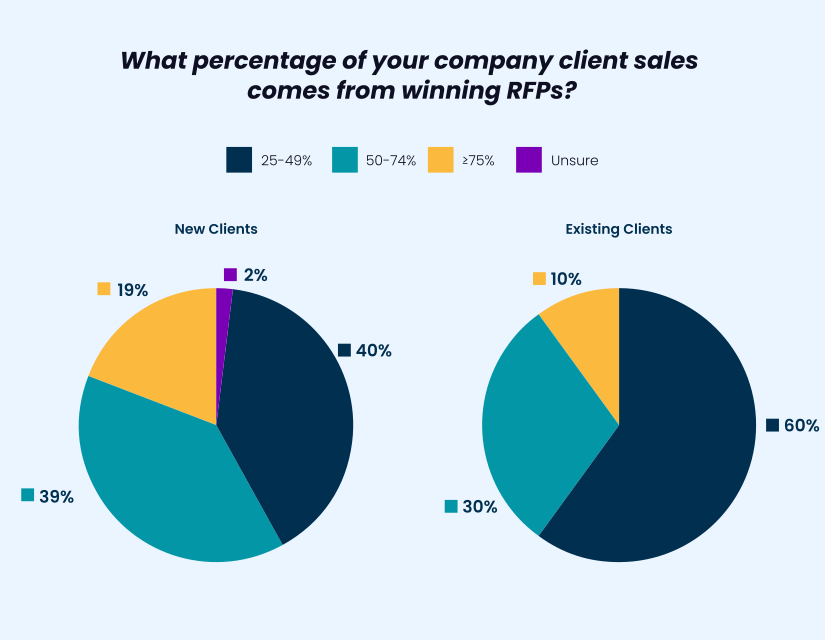
Even at moderate volumes, the financial stakes of Professional Services proposals are significant. The largest group of respondents (40%) report that 25–49% of new business revenue comes through RFPs, while an even larger share (60%) say the same for existing client revenue.
Opportunity values also trend toward the mid-to-high range. The largest segment of respondents (30%) report pursuing RFPs valued between $100K and $500K, and exactly half report opportunities above $500K.
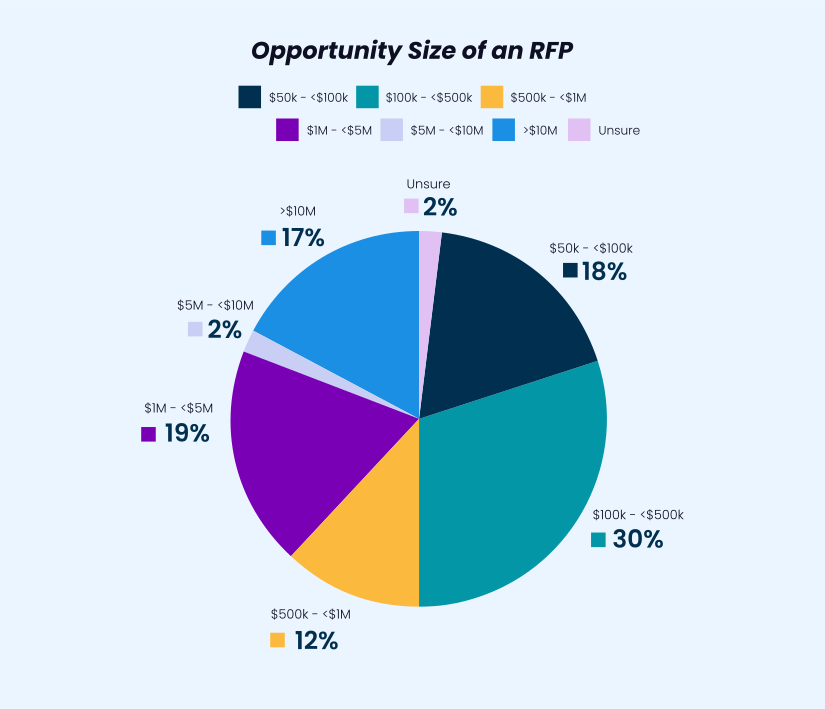
In other words, each response carries meaningful revenue potential. Even a small number of missed or deprioritized opportunities can have a noticeable impact on pipeline performance. In short, one proposal may represent months of delivery work.
Actionable insight: Proposal capacity should be managed as a revenue resource, not just an operational task. Ensuring teams have the tools, content access, and contributor support to respond consistently can directly influence how much revenue actually makes it into the pipeline.
-
Personalization and Speed Are the Biggest Operational Pressures
Professional Services teams face a concentrated set of operational challenges tied to both customization and response speed.
The two most frequently cited challenges are:
- Personalizing responses (60%)
- Responding in a timely manner (60%)
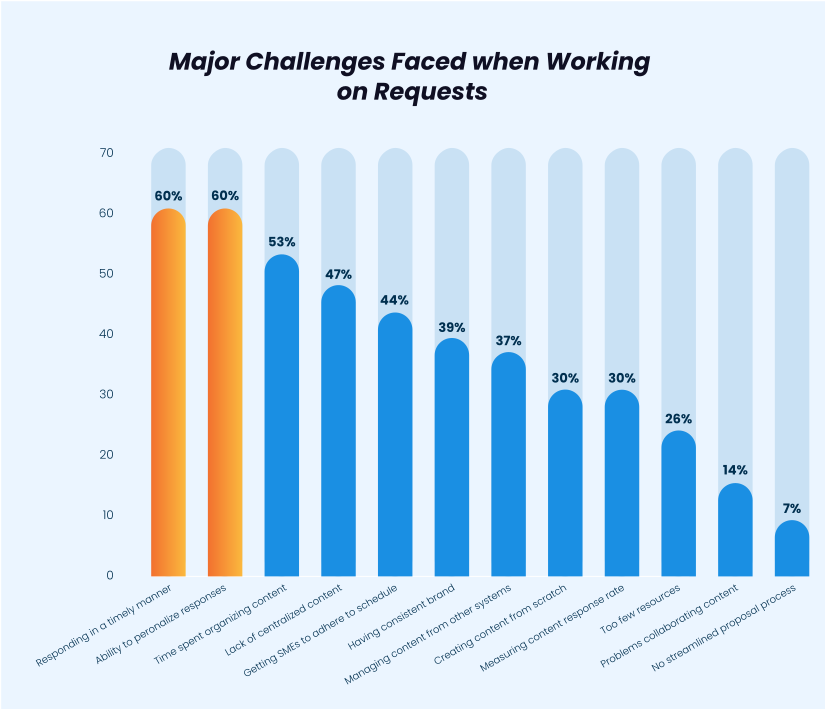
These pressures reflect the expectations of Professional Services buyers. Clients want proposals that demonstrate a deep understanding of their business, their industry, and their specific challenges.However, tailoring responses requires input from multiple contributors across the organization. When timelines are tight and contributors are balancing other priorities, proposal teams often face trade-offs between speed and depth.
Actionable insight: Reusable expertise libraries and structured content repositories can significantly reduce the effort required to personalize responses while maintaining quality.
-
Content Fragmentation Continues to Slow Proposal Teams
Content management remains one of the most persistent bottlenecks in the Professional Services proposal process. More than half of respondents (53%) report spending significant time locating, organizing, and updating content. Nearly half (47%) report lacking a centralized content solution, while 37% struggle to manage content stored across multiple systems.
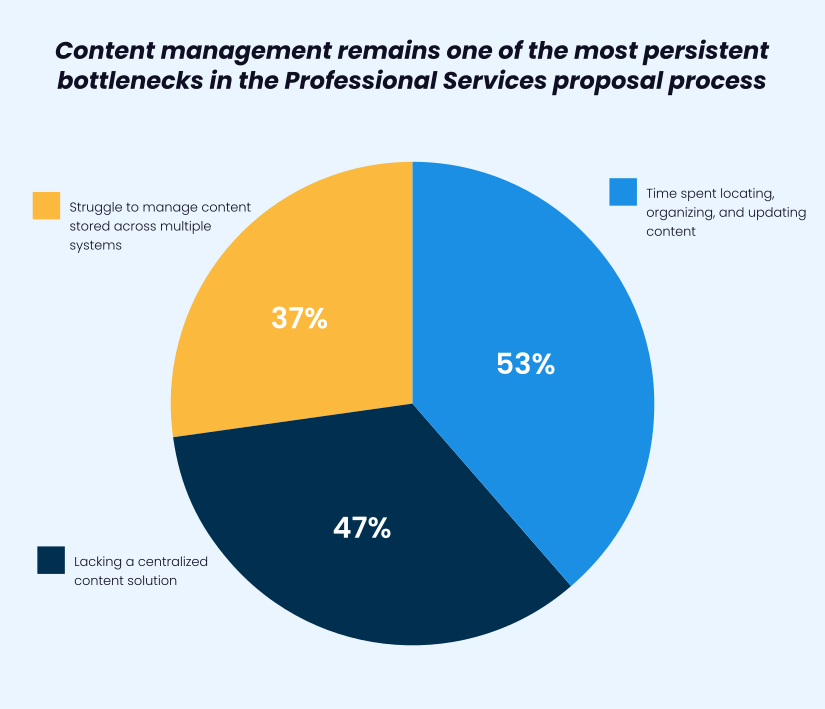
When proposal materials are scattered across shared drives, email threads, and individual contributor folders, teams spend more time searching for content than improving the response itself. Fragmented content also increases the risk of outdated messaging, inconsistent positioning, and unnecessary rework.
Actionable insight: Centralized, searchable content repositories can dramatically reduce preparation time while improving response consistency.
-
Proposal Work Is a Cross-Functional Coordination Exercise
Professional Services proposals are rarely produced by a small team. Instead, they rely on collaboration across multiple functions. More than half of respondents (54%) report that 6–10 people are regularly involved in responding to RFPs, while another 23% involve 11–15 contributors. At the upper end, 20% report teams of more than 20 participants.
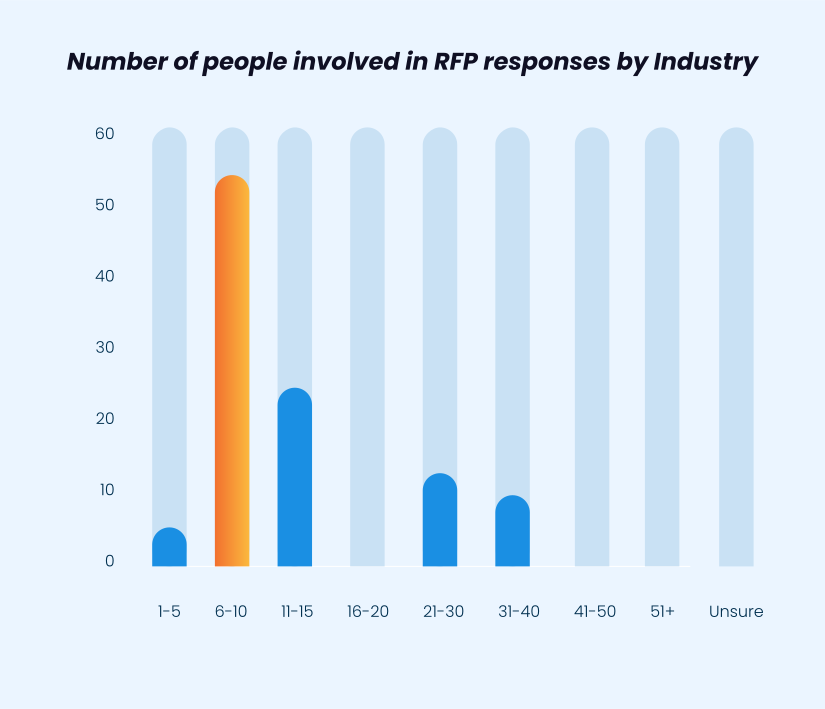
These contributors often include subject matter experts, delivery leaders, pricing teams, and executives. While this collaborative structure improves response quality and credibility, it also introduces coordination challenges. Securing timely input from subject matter experts remains a common bottleneck, with 44% reporting difficulty keeping contributors aligned with schedules.
Actionable insight:Structured workflows and clearly defined contributor responsibilities can significantly reduce coordination friction.
-
Traditional Document Tools Still Dominate Proposal Creation
Despite growing complexity, most Professional Services organizations continue to rely on general-purpose productivity tools to produce proposals.
Word is the most commonly used application (40%), followed by PowerPoint (26%) and Adobe InDesign (20%), reflecting a stronger emphasis on presentation and design than in many other industries.
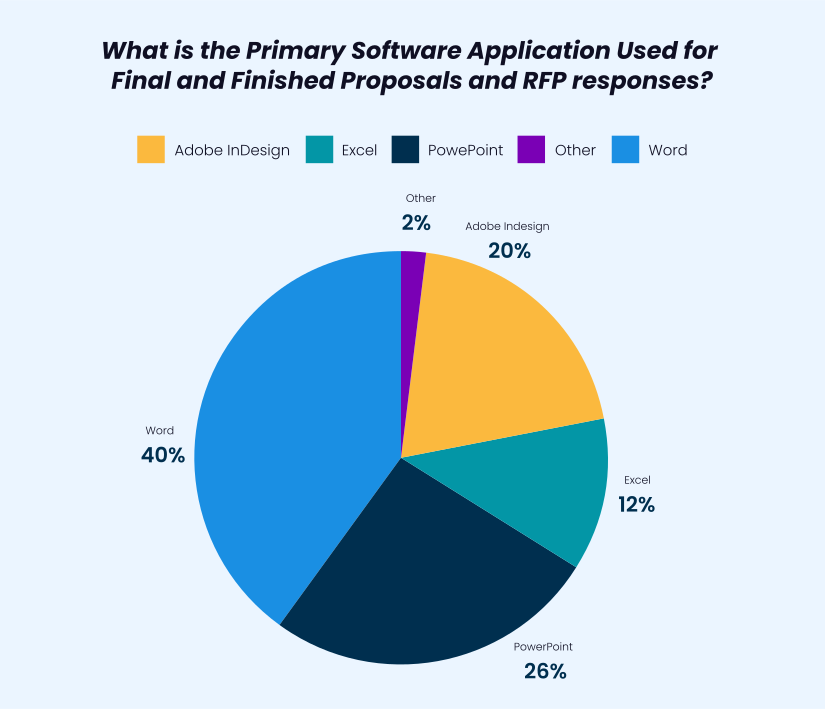
While these tools support flexibility, they also require manual coordination across multiple formats and files. As proposal volumes grow, maintaining consistency, formatting, and version control becomes increasingly difficult.
Actionable insight:Purpose-built proposal management platforms can complement existing document tools by centralizing content, managing contributors, and maintaining consistency across responses.
-
AI Is Delivering Speed and Capacity Gains
AI adoption in Professional Services proposal teams is widespread and strongly focused on improving execution efficiency. The most frequently cited benefit is faster researching and summarizing reported by 86% of respondents, the highest of any industry in the survey. Over 60% are using AI to answer RFP questions and 60% for writing executive summaries.
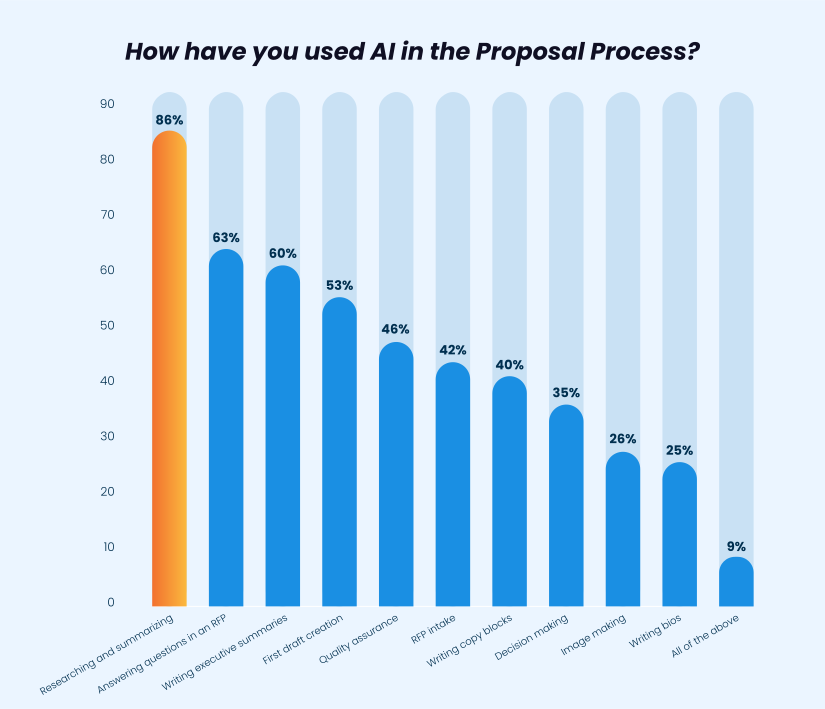
These use cases reflect where many teams are starting with AI: the early stages of proposal development, where research, drafting, and information synthesis consume the most time. When used well, these tools can significantly reduce the effort required to assemble a first draft and gather supporting information.
For many proposal teams, this is the first meaningful shift in how responses are built. Tasks that once required hours of manual searching, drafting, and editing can now be completed much more quickly, giving teams more time to review, refine, and tailor the final response.
Actionable insight:Most organizations are currently using AI to accelerate research and drafting. The next opportunity is to integrate AI more deeply into the proposal workflow. This helps teams to surface relevant content faster, organize responses more effectively, and free up time for the strategic work that ultimately strengthens proposals.
What This Means for Professional Services Proposal Teams
Professional Services proposal teams operate in a dynamic environment shaped by fluctuating demand, significant revenue exposure, and increasing expectations for customization.
Even though proposal volumes may appear moderate compared to some industries, the financial stakes of each response remain high. At the same time, fragmented content systems, coordination challenges, and manual workflows continue to slow teams down.
AI and proposal technology are already helping organizations increase speed and throughput. The next opportunity lies in using these tools not only to manage variability, but to strengthen differentiation, improve personalization, and drive more consistent win outcomes.
Download the Full Benchmark Report
Want to see how your proposal operation compares to peers across industries? Download the 10th Annual Proposal Management Survey to explore detailed insights on proposal volume, revenue impact, team structure, AI adoption, and the future of proposal work. And, if you’re ready to improve your proposal management process, talk to us.Top of FormBottom of Form