What is QPilot Workspace?
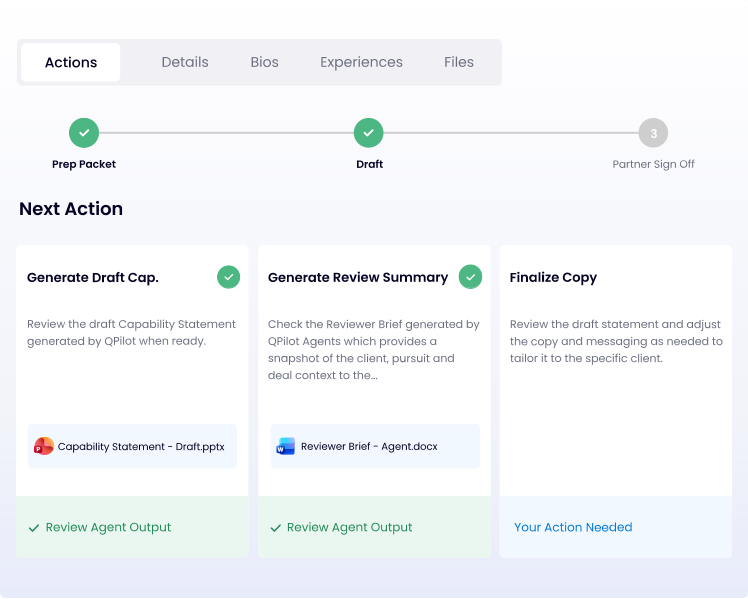
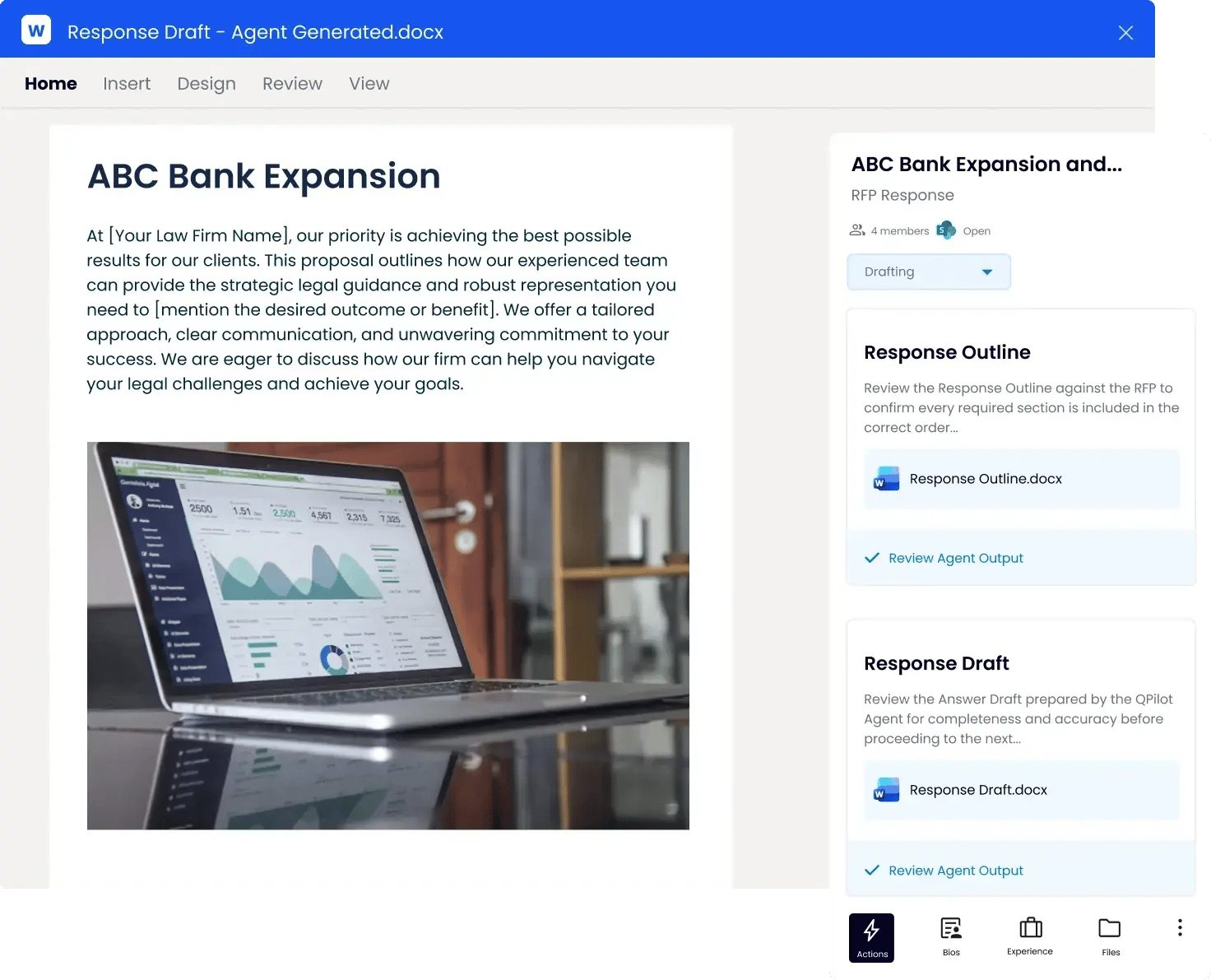
QPilot Workspace is where your BD, proposal, and practice teams and agents work on each pursuit side by side, from opening an opportunity to final delivery. It holds your templates, assignments, and skills, and it runs inside Microsoft 365, Copilot, Claude, and ChatGPT, so people work where they already do.
What is PursuitIQ?
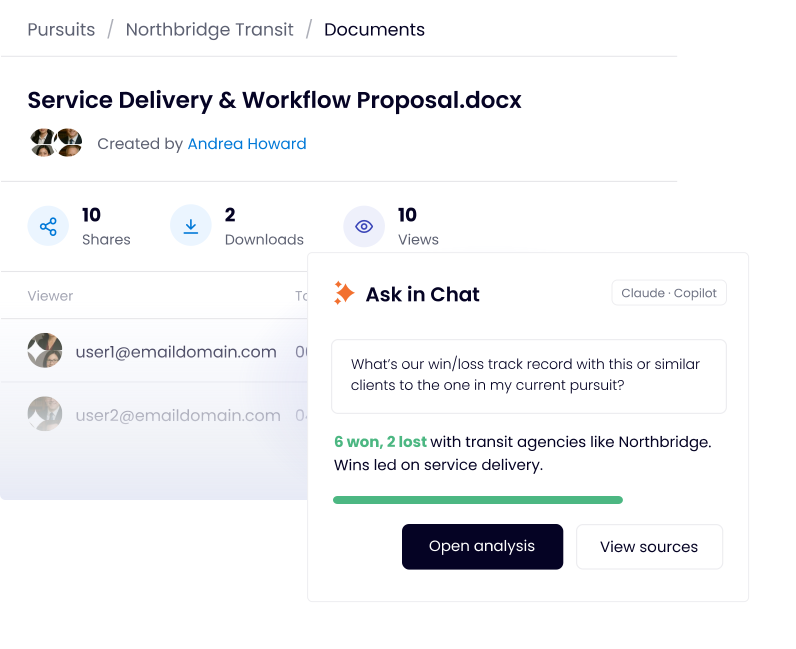
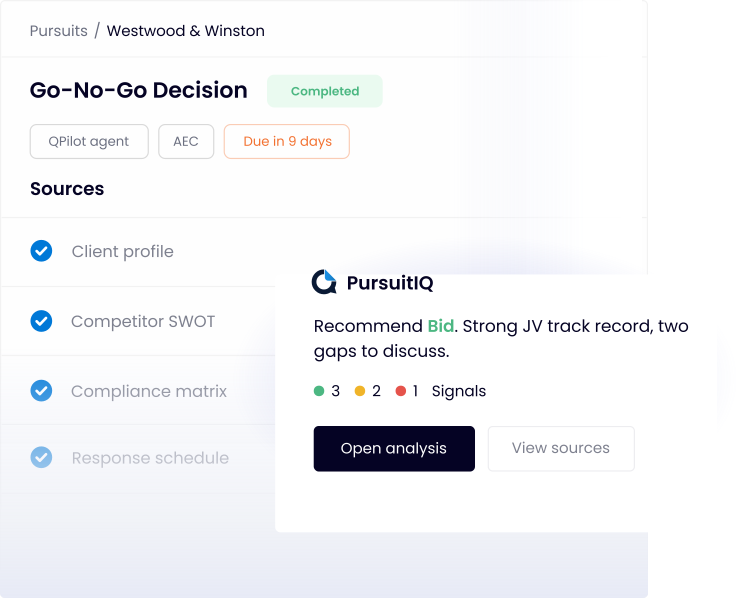
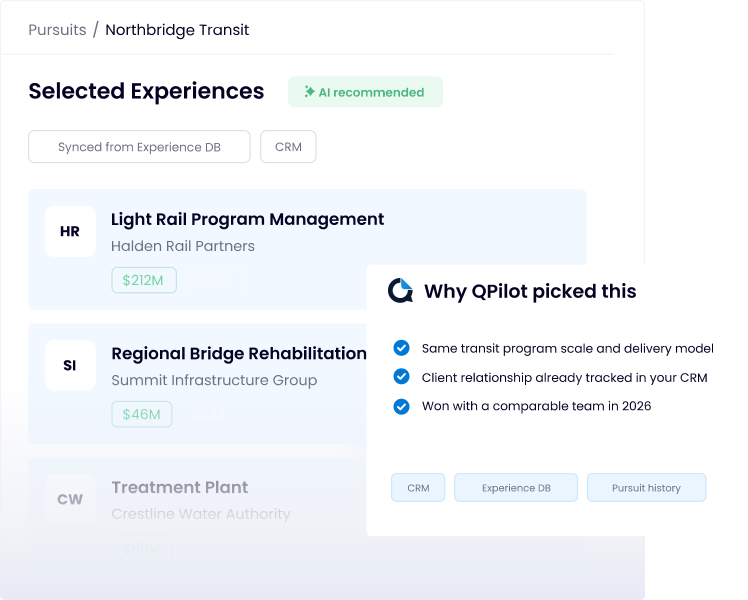
PursuitIQ is the pursuit intelligence layer that grounds QorusDocs and your agents in real, shared context across your firm. It connects your people, experience, answers, and pursuit history, so every proposal, pitch, and RFP response reflects the reality of your business, and it learns from each pursuit to sharpen the next.
What is professional services proposal software?
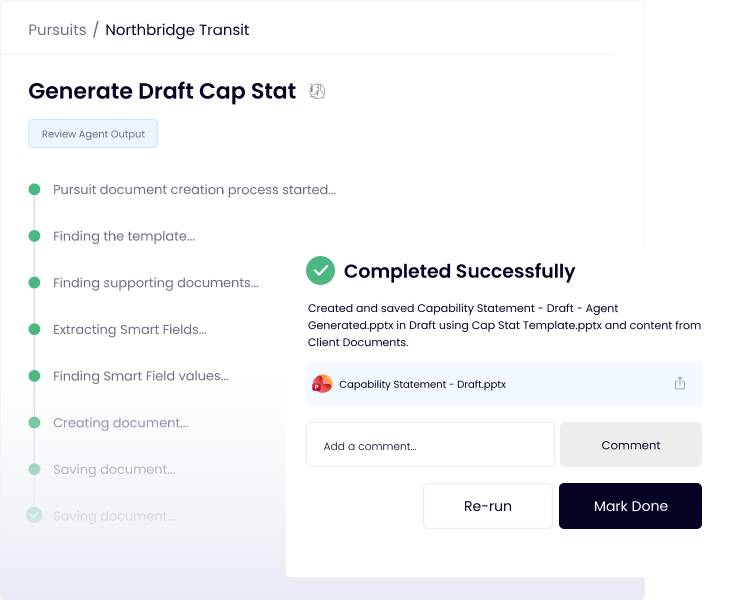
Professional services proposal software helps consulting, accounting, and advisory firms create engagement proposals, RFP responses, statements of work, and client pitches faster and more consistently. The best platforms automate content assembly, surface the right credentials and case studies, and produce polished output without the manual effort that typically pulls experts away from billable work. QorusDocs goes further by using agents to handle drafting, formatting, and collaboration directly inside Microsoft 365, so BD and proposal teams move from intake to client-ready document in a fraction of the time.
How is QorusDocs different from ChatGPT, Claude, Copilot, and other proposal tools for professional services?
General AI tools can help draft text, but they do not know your firm. Most proposal tools speed up document production. QorusDocs is built to help professional services firms win more work, not just move faster. The difference shows up in three ways. First, agents work from your governed content library, not the open internet, so every draft reflects your firm's approved messaging, credentials, and value story. Second, the output is a polished Word or PowerPoint document inside Microsoft 365, not an export that needs reformatting before it reaches the client. Third, engagement analytics show how clients interact with proposals after they are sent, giving teams insight into what resonates and what to improve next time.
What types of documents does QorusDocs support for professional services firms?
QorusDocs supports the full range of pursuit and client-facing documents that professional services teams produce. That includes engagement proposals, consulting proposals, RFP responses, statements of work, client pitches, pitch decks, business cases, capability statements, and executive presentations. Templates and workflows are built around professional services terminology and BD processes rather than adapted from a generic sales tool, so teams work in a familiar language from day one.
How does QorusDocs reduce the non-billable time experts spend on proposals?
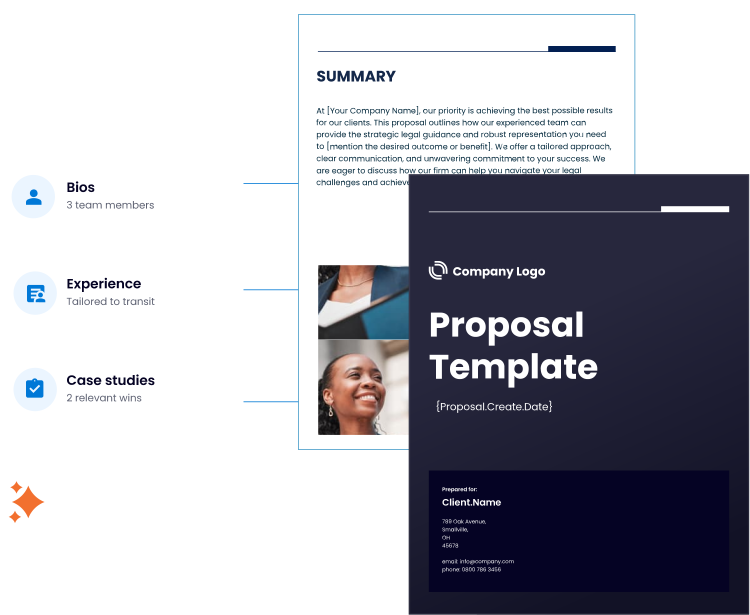
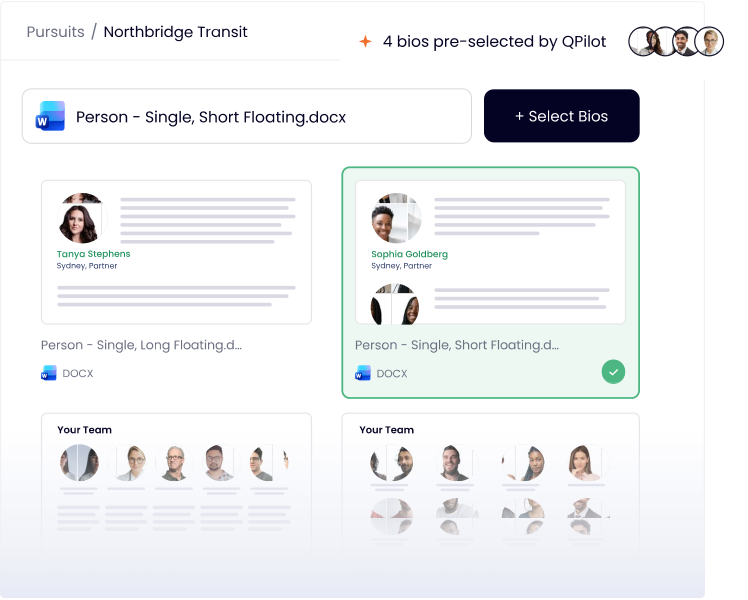
The biggest cost of proposals in professional services is not the tool, it is the expert time consumed by content assembly, formatting, and chasing input. Agents handle first drafts automatically by pulling the most relevant bios, case studies, service descriptions, and past engagement content from a central library and placing them in the right sections. Practice leads and SMEs review and refine rather than create from scratch. The result is a measurable reduction in non-billable hours per pursuit, which compounds quickly across a team managing multiple overlapping deadlines.
How does collaboration work across BD, proposal, and practice teams?
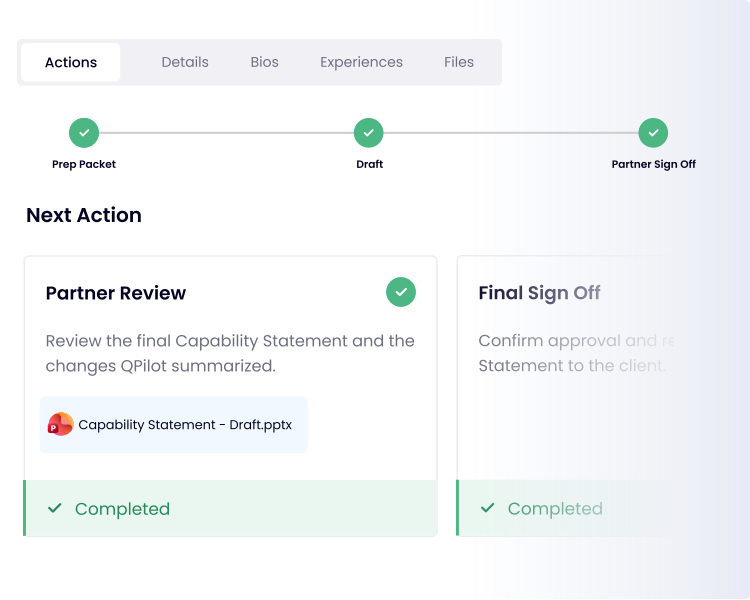
QPilot workspace brings tasks, deadlines, content, and contributors together in one place inside Microsoft 365. Agents assign sections, automate reminders, and track progress so proposal managers are not manually chasing input across offices and time zones. For firms where proposals regularly involve six to fifteen contributors from different practice areas, this structure makes the difference between a coordinated pursuit and a last-minute scramble. 73% of QorusDocs customers report a positive impact on ease of collaboration after adoption.
How does QorusDocs protect client data and firm IP?
QorusDocs is built on Microsoft Azure OpenAI and is SOC 2 Type II and GDPR compliant. Client information, engagement data, and proprietary firm content stay inside your secure Microsoft 365 environment and are never used to train public AI models. Role-based permissions control who can access, edit, and publish content at every level, and approval workflows ensure that only vetted, current material reaches clients. For professional services firms where proposals contain confidential client context and commercially sensitive pricing, this governance is a meaningful distinction from general-purpose AI writing tools.