What is IT proposal software?
IT proposal software helps technology services teams, managed service providers, and IT consulting firms create proposals, SOWs, RFP responses, and security questionnaires faster and more accurately. The best platforms automate content assembly, enforce brand and messaging consistency, and connect ROI proof to the proposal narrative so every document reflects the firm's credibility. QorusDocs goes further by using agents to handle drafting, formatting, and collaboration directly inside Microsoft 365, so sales, pre-sales, and proposal teams close the gap between opportunity and client-ready document without the manual effort that slows deals down.
What is QPilot Workspace?
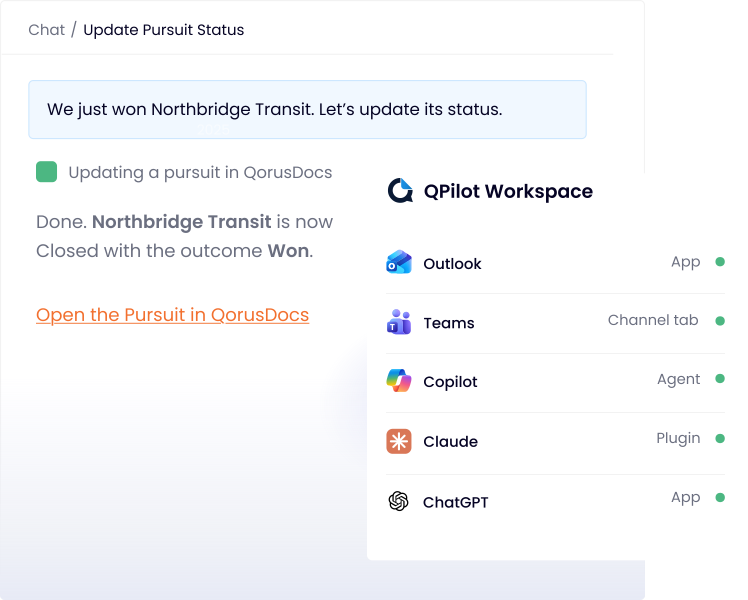
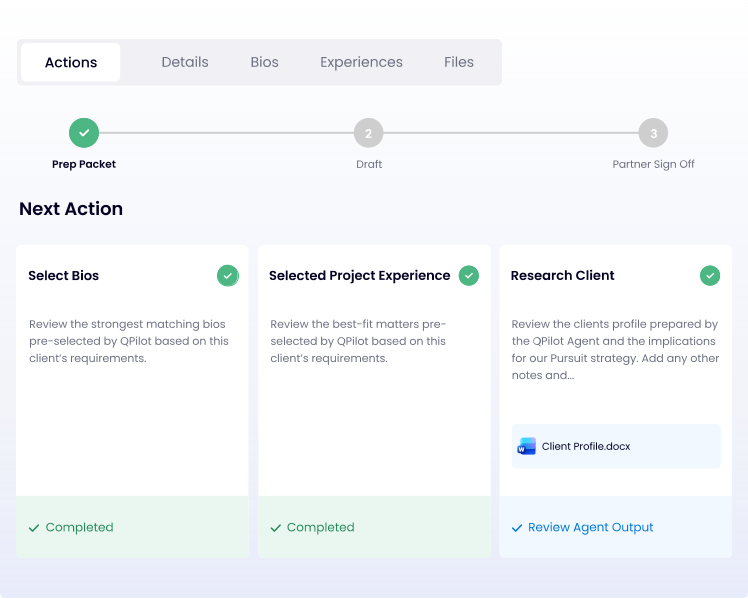
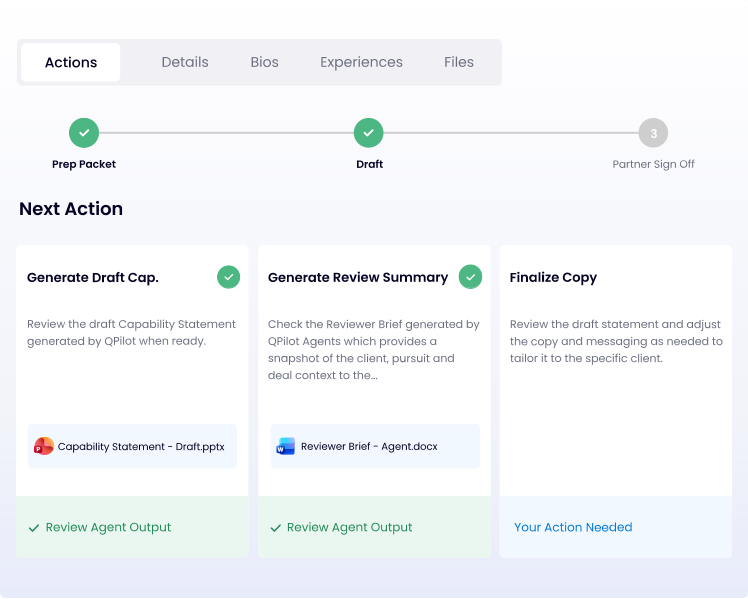
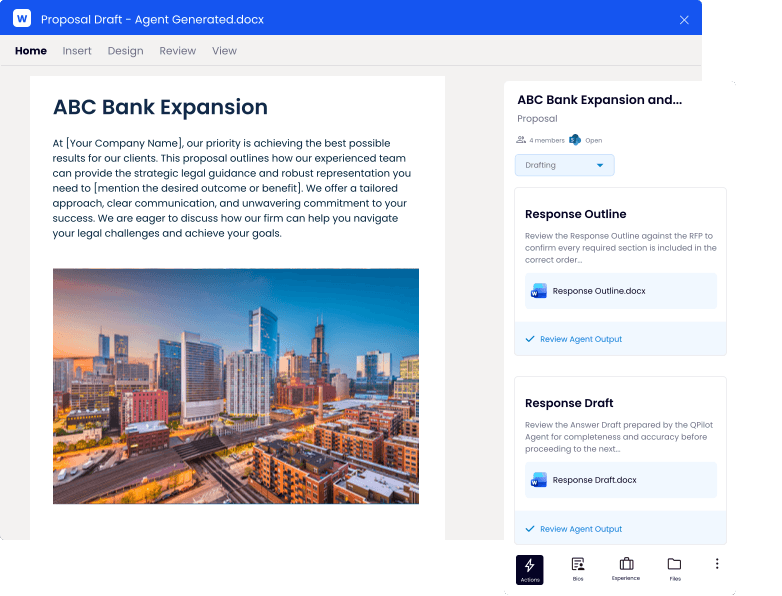
QPilot Workspace is where your sales, pre-sales, and proposal teams and agents work on each deal side by side, from opening an opportunity to final delivery. It holds your templates, assignments, and skills, and it runs inside Microsoft 365, Copilot, Claude, and ChatGPT, so people work where they already do.
What is PursuitIQ?
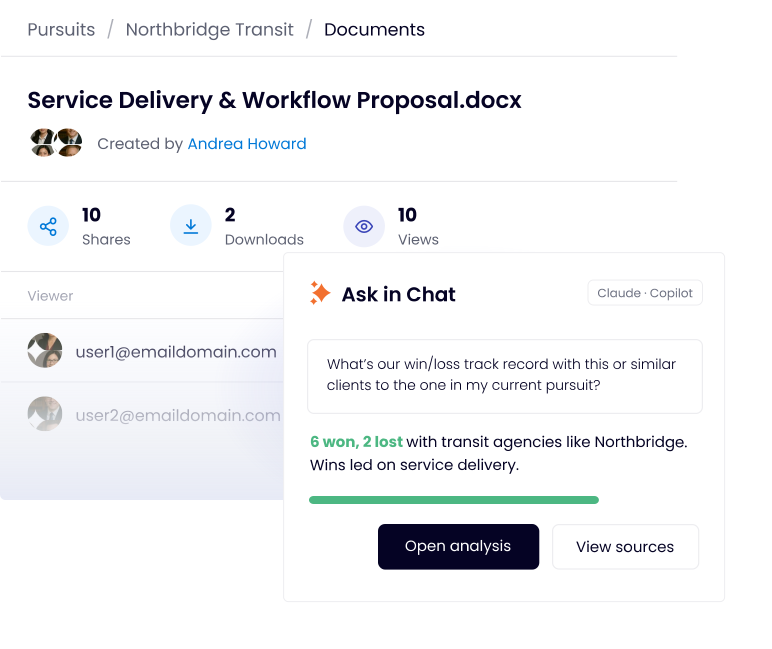
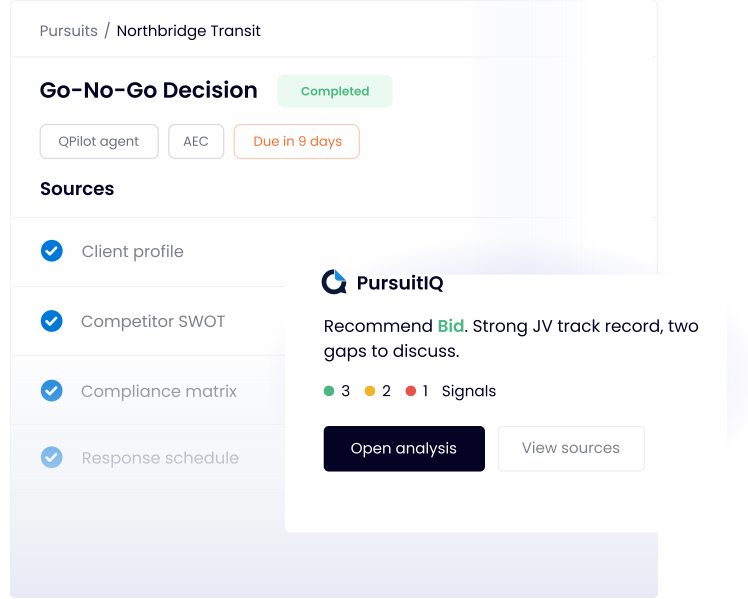
PursuitIQ is the pursuit intelligence layer that grounds QorusDocs and your agents in real, shared context across your firm. It connects your people, experience, answers, and pursuit history, so every proposal, pitch, and RFP response reflects the reality of your business, and it learns from each pursuit to sharpen the next.
How is QorusDocs different from ChatGPT, Claude, Copilot, and other proposal tools for IT and technology services?
General AI tools like ChatGPT, Claude, and Copilot can help draft text, but they do not know your service descriptions, scope language, or pricing assumptions. Most IT proposal tools are built around a content library that teams query manually. QorusDocs uses agents to handle the repetitive work automatically, from surfacing approved service descriptions, scope language, and pricing assumptions through to formatting final output in Word and PowerPoint. The other key difference is value proof. IT and tech services teams operate in a commoditized, competitive market where buyers expect vendors to demonstrate measurable business impact, not just list capabilities. QorusDocs connects ROI calculators and business case data directly to proposals and SOWs so the value story is built in, not assembled separately in a spreadsheet before the meeting.
What types of documents does QorusDocs support for IT and technology services teams?
QorusDocs supports the full range of client-facing sales documents that IT and tech services teams produce. That includes proposals, statements of work, RFP responses, presentations, and client pitches. Templates and workflows are tailored to how technology services firms actually sell and scope work, covering service descriptions, scope of work language, timelines, roles, and rates, rather than adapted from a generic professional services template.
How does QorusDocs help sales and pre-sales teams move faster without sacrificing accuracy?
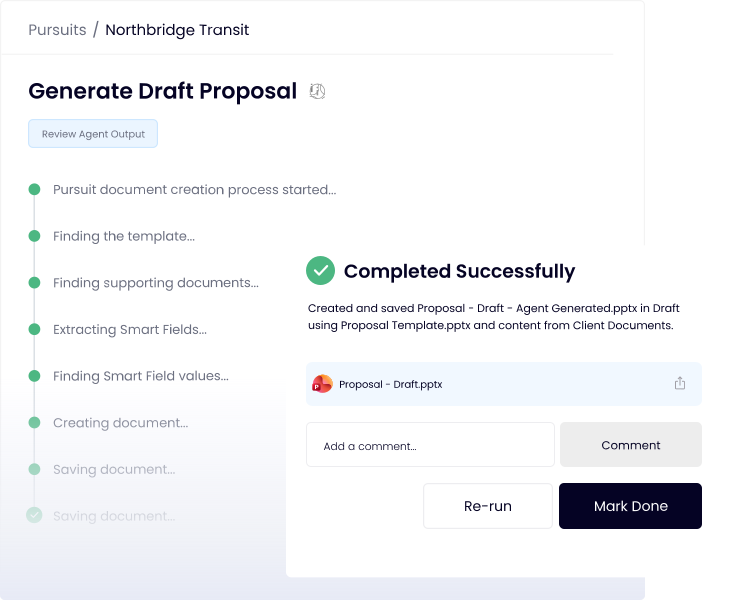
Speed and accuracy are in constant tension for IT sales teams. Agents resolve that tension by drafting SOWs and proposals from approved content automatically, pulling the right service descriptions, case studies, pricing assumptions, and scope language from your governed library. Solution architects and pre-sales engineers review and refine rather than build from scratch. The result is faster time to first draft without the errors, inconsistencies, or off-brand language that come from assembling documents manually under deadline pressure. Teams using QorusDocs have achieved up to 5x more RFP responses with the same resources.
How does QorusDocs handle SOW accuracy and scope risk?
Poorly defined scope is one of the most common sources of margin erosion and client conflict in technology services. QorusDocs addresses this by giving teams a centralized library of approved scope language, service descriptions, assumptions, and exclusions that can be assembled accurately into every SOW. Role-based permissions control which content teams can access and modify, and approval workflows ensure that scope, pricing, and commercial terms are reviewed before they reach the client. The goal is a SOW that is accurate, complete, and defensible from day one.
How does QorusDocs connect value proof to proposals and SOWs?
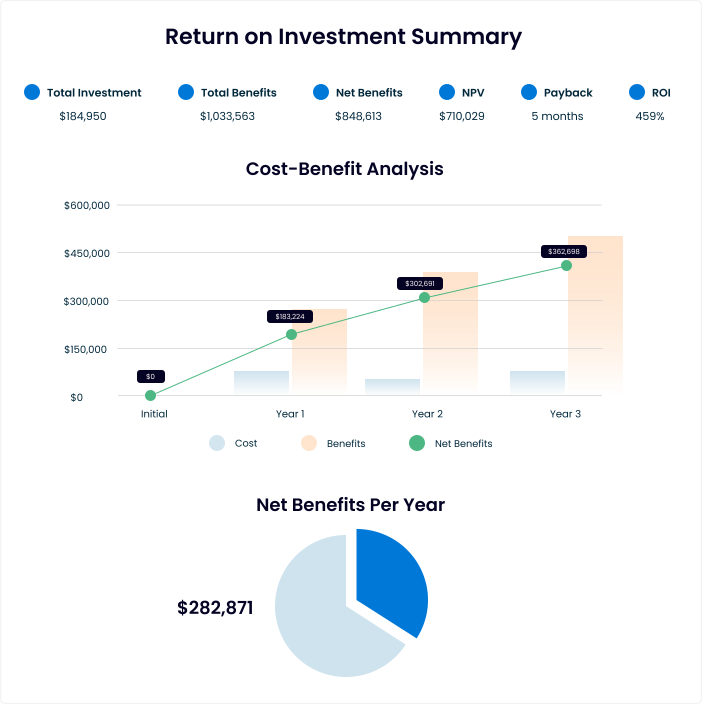
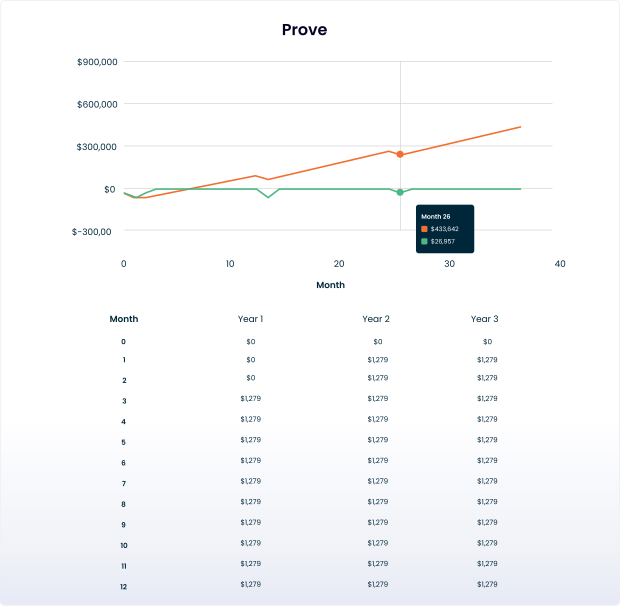
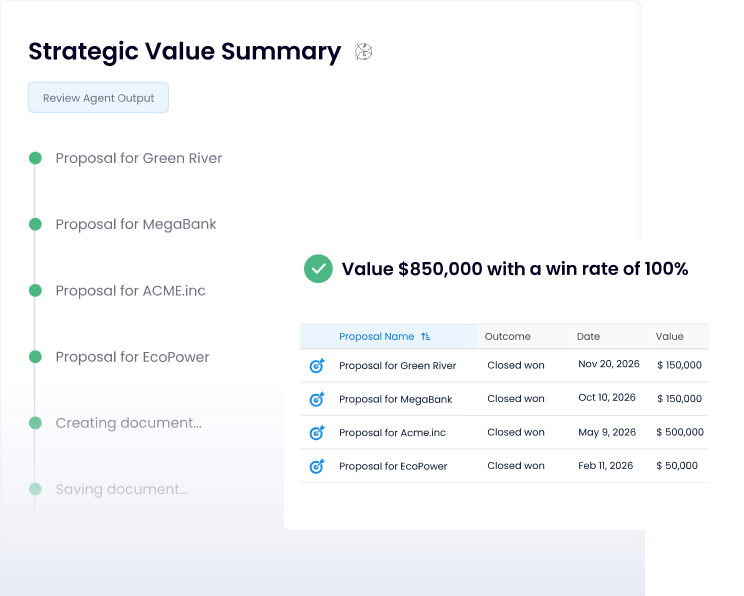
IT and tech services buyers increasingly require financial justification before committing to an engagement. QorusDocs provides ROI calculators and business case frameworks that quantify the impact of your services in terms buyers use internally to get decisions approved. Those outputs flow directly into proposals and SOWs so the value narrative is consistent from the first conversation to the signed document. For value engineers and pre-sales teams, this removes the need to maintain a separate ROI tool disconnected from the proposal workflow.
How does collaboration work across sales, pre-sales, and proposal teams?
QorusDocs brings tasks, content, deadlines, and contributors together in one place inside Microsoft 365. Agents assign sections, automate reminders, and track progress so proposal managers are not manually following up on input from solution architects, sales ops, and SMEs across different teams and time zones. CRM integrations with Salesforce and Dynamics keep opportunity context synced so teams are working from current pipeline data rather than manually copying information between systems.
How does QorusDocs protect sensitive client and commercial data?
QorusDocs is built on Microsoft Azure OpenAI and is SOC 2 Type II and GDPR compliant. Client data, commercial terms, and proprietary service content stay inside your secure Microsoft 365 environment and are never used to train public AI models. For IT and technology services firms that handle sensitive client environments and confidential commercial agreements, this architecture is a meaningful distinction from general-purpose AI tools built on public models. Role-based permissions and approval workflows control access at every level of the proposal process.