- Guide

Winning deals today requires more than a strong solution. Buyers—especially CFOs and decision-making committees—need clear financial justification before they move forward. They want proof that your solution will deliver measurable business impact, not just promises or product features.
That is where a strong business case becomes essential. A credible business case helps buyers understand the value of your solution in practical, financial terms. It reduces uncertainty, builds confidence, and gives internal champions the evidence they need to secure approval.
The challenge is that many business cases fall short. They rely on vague assumptions, inflated ROI claims, or disconnected spreadsheets that create more skepticism than trust.
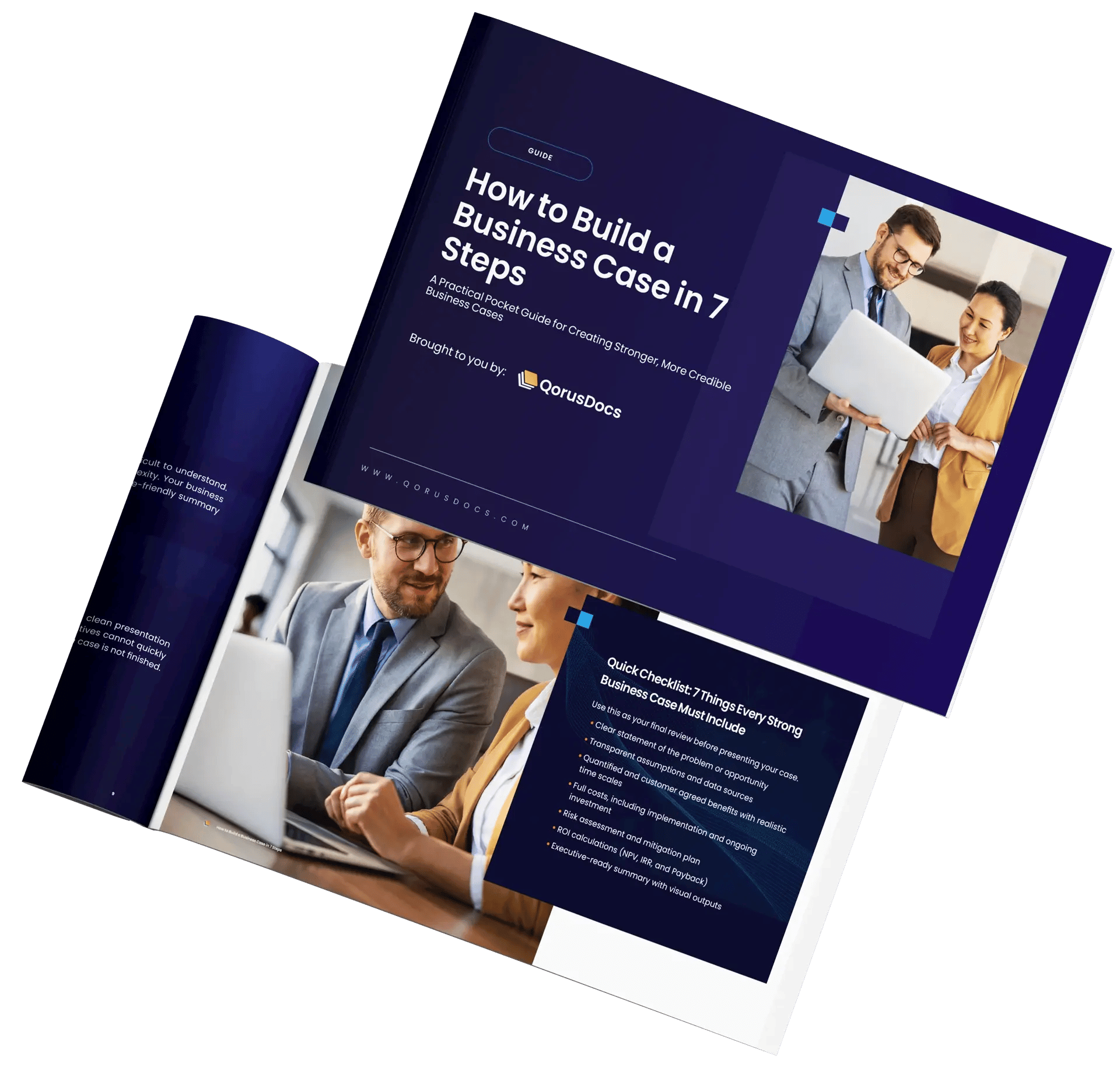
The strongest business cases do the opposite. They are clear, transparent, realistic, and aligned to the buyer’s priorities. They move the conversation from “why your product” to “why this investment makes business sense.” This pocket guide walks through the seven essential elements every strong business case should include.

Before discussing solutions, define what needs to change. A strong business case begins with a clear statement of the problem, challenge, or opportunity facing the buyer. This creates urgency and gives your proposal context. Ask:
This should be tied to strategic priorities, not just operational irritations. For example, reducing proposal turnaround time matters because it improves win rates, increases capacity, and drives revenue, not simply because the current process is frustrating. When the business problem is clearly defined, the rest of the case becomes easier to justify.
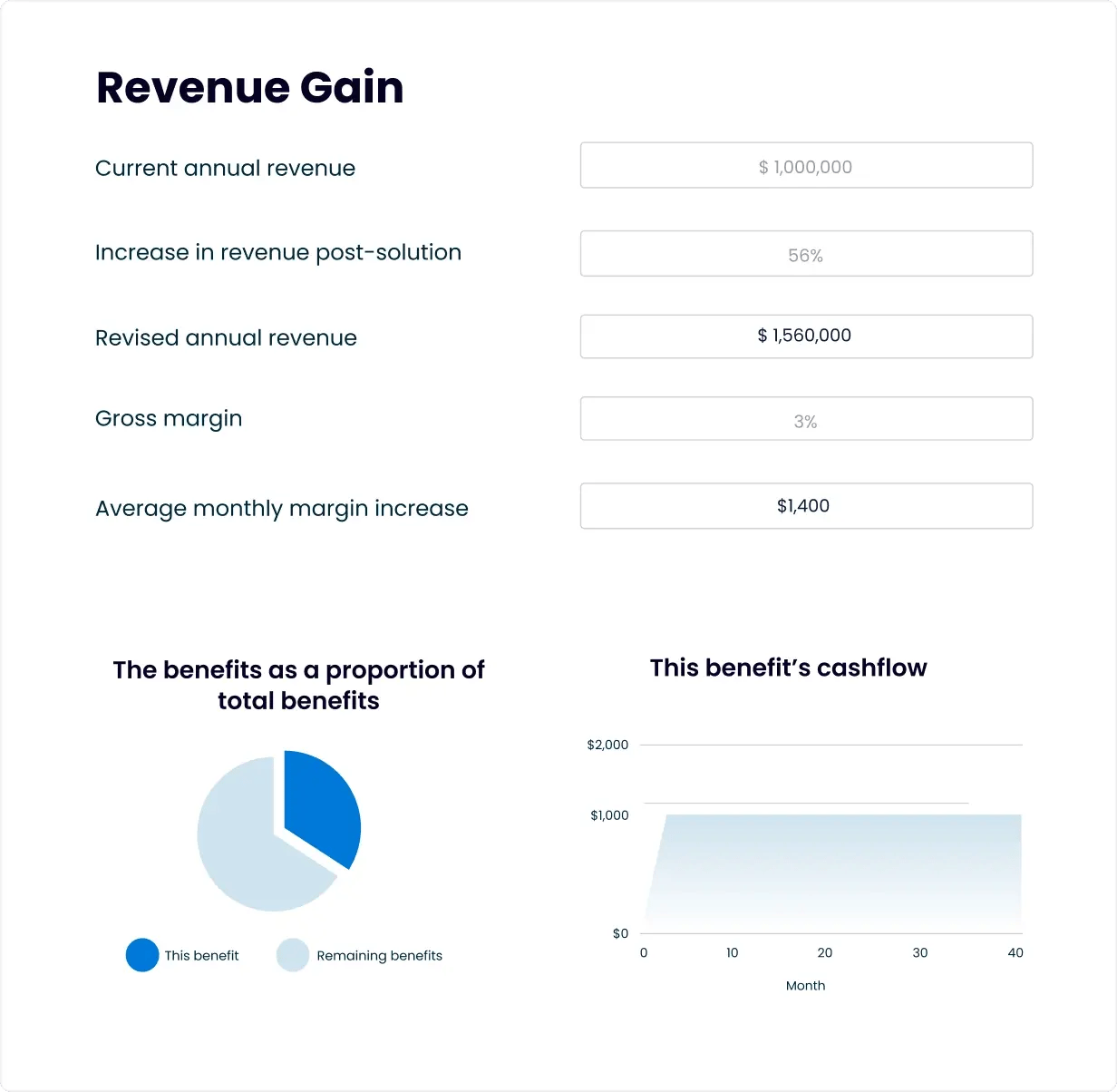
Trust disappears when the math feels murky. Buyers need to understand how you arrived at your conclusions. Hidden formulas, vague estimates, and generic benchmarks create doubt. Strong business cases clearly show:
Transparency builds credibility. Buyers are far more likely to trust conservative, visible assumptions than aggressive claims they cannot verify.
Pro Tip: Involve client stakeholders early to validate assumptions together. Collaboration improves both accuracy and buy-in.

This is the heart of the business case. Buyers want measurable outcomes tied directly to business value. That means translating your solution into financial and operational impact. Strong business cases quantify benefits such as:
The key is specificity. Instead of saying: “Our solution improves productivity,” say, “Our solution reduces proposal creation time by 50%, allowing your team to respond to more high-value opportunities without adding headcount.” The more concrete the outcome, the stronger the case.
A credible business case never ignores the investment side. Buyers want the full picture, not selective math. That includes:
If costs are hidden or minimized too aggressively, trust erodes quickly. Honest, complete cost visibility strengthens your position because it shows confidence and reduces surprises later.
Remember: Buyers are not looking for the cheapest option. They are looking for the best investment decision.

Acknowledging risk often strengthens your credibility. Strong business cases identify:
Then, just as importantly, they explain how those risks will be managed. This might be through phased rollout plans, training support, sponsorship or success tracking dashboards. Whatever it may be, addressing risks doesn’t weaken your case. It proves foresight.
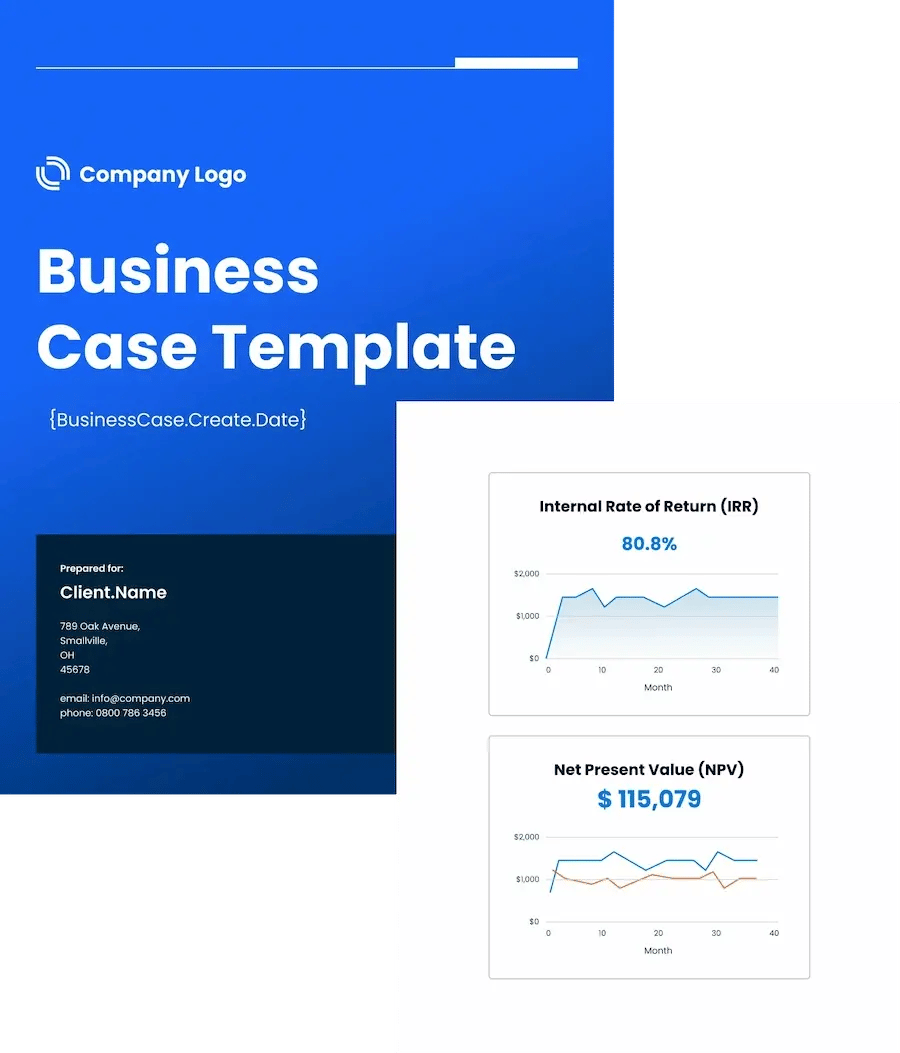
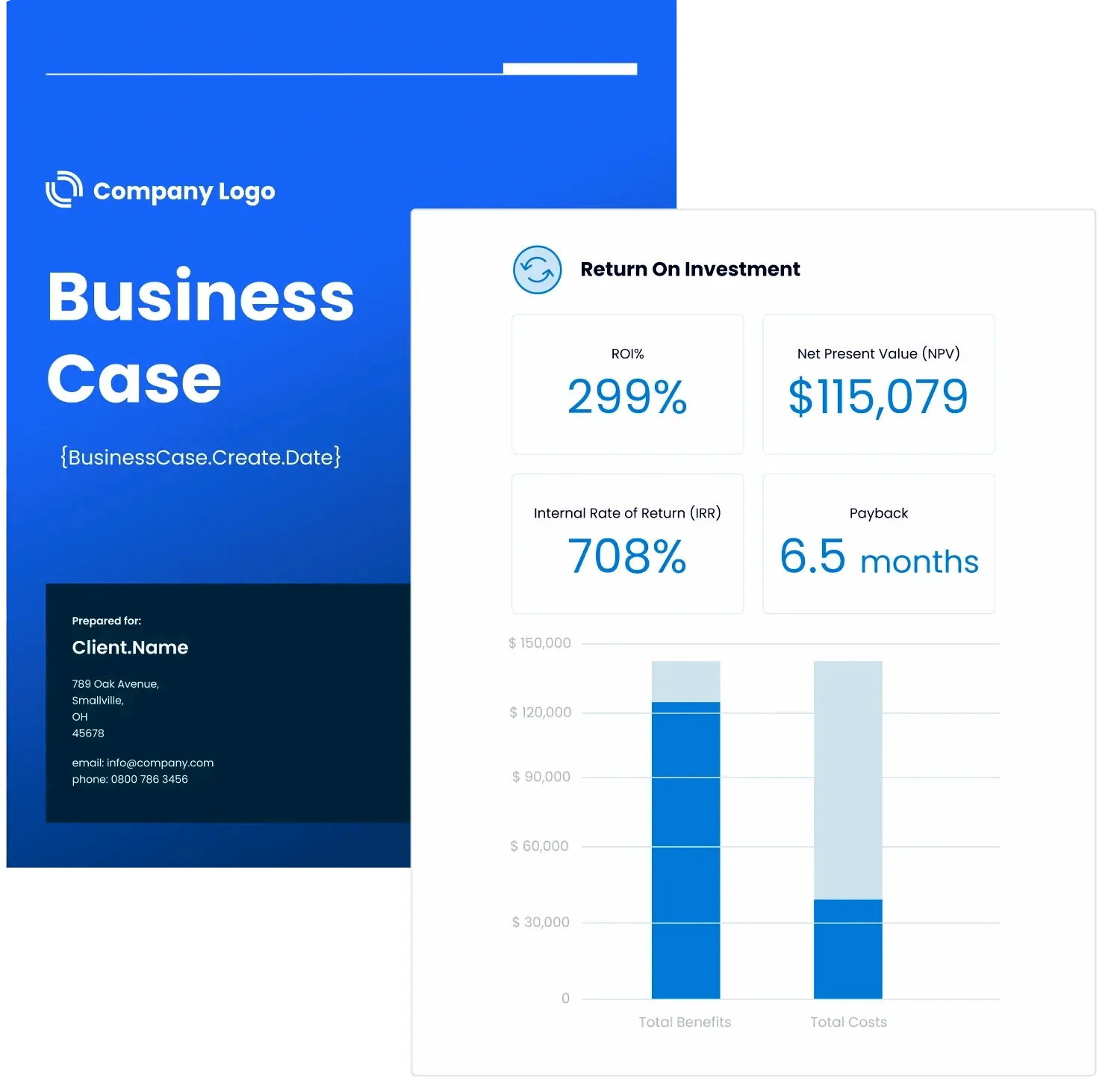
Different stakeholders care about different financial measures. Your business case should make the return obvious using familiar financial models. The three most common are:
Your job is to make the numbers easy to defend internally. Using multiple measures shows rigor, improves credibility and helps different stakeholders evaluate the decision with confidence.
Even the best analysis can fail if it is difficult to understand. Decision-makers need clarity, not complexity. Your business case should end with a concise, executive-friendly summary that includes:
Visual dashboards, summary tables, and clean presentation formats make a major difference. If executives cannot quickly understand and repeat the value story, the case is not finished.

A strong business case does more than justify a purchase. It builds confidence. It helps buyers move forward with clarity, gives champions the proof they need internally, and positions your team as a strategic partner rather than just another vendor.
In today’s market, proving value is not optional. It is the difference between stalled deals and signed agreements. The strongest teams do not wait until procurement asks for justification. They lead with value early, frame the conversation around business outcomes, and make the decision easier to defend from day one.
Interested in learning more about leading with value? Download The Ultimate Guide to Value Management.