
How Law Firms Can Improve the Pitch Process and Win More Repeat Business
AI has changed the build-versus-buy conversation for proposal teams. Not so long ago, the options were fairly straightforward. You could buy a proposal platform, ask IT to build something, or keep the process moving with documents, spreadsheets, shared folders, and a lot of manual effort.
Nowadays, teams can use general-purpose LLMs like ChatGPT, Claude, or Gemini. They may have access to enterprise AI tools like Microsoft Copilot. AI is also showing up inside CRMs, proposal automation platforms, value-selling tools, and internal knowledge systems. Then, mix in custom GPTs, lightweight workflows, and internal agents to the mix, and suddenly the decision is no longer a simple “build or buy” conversation.
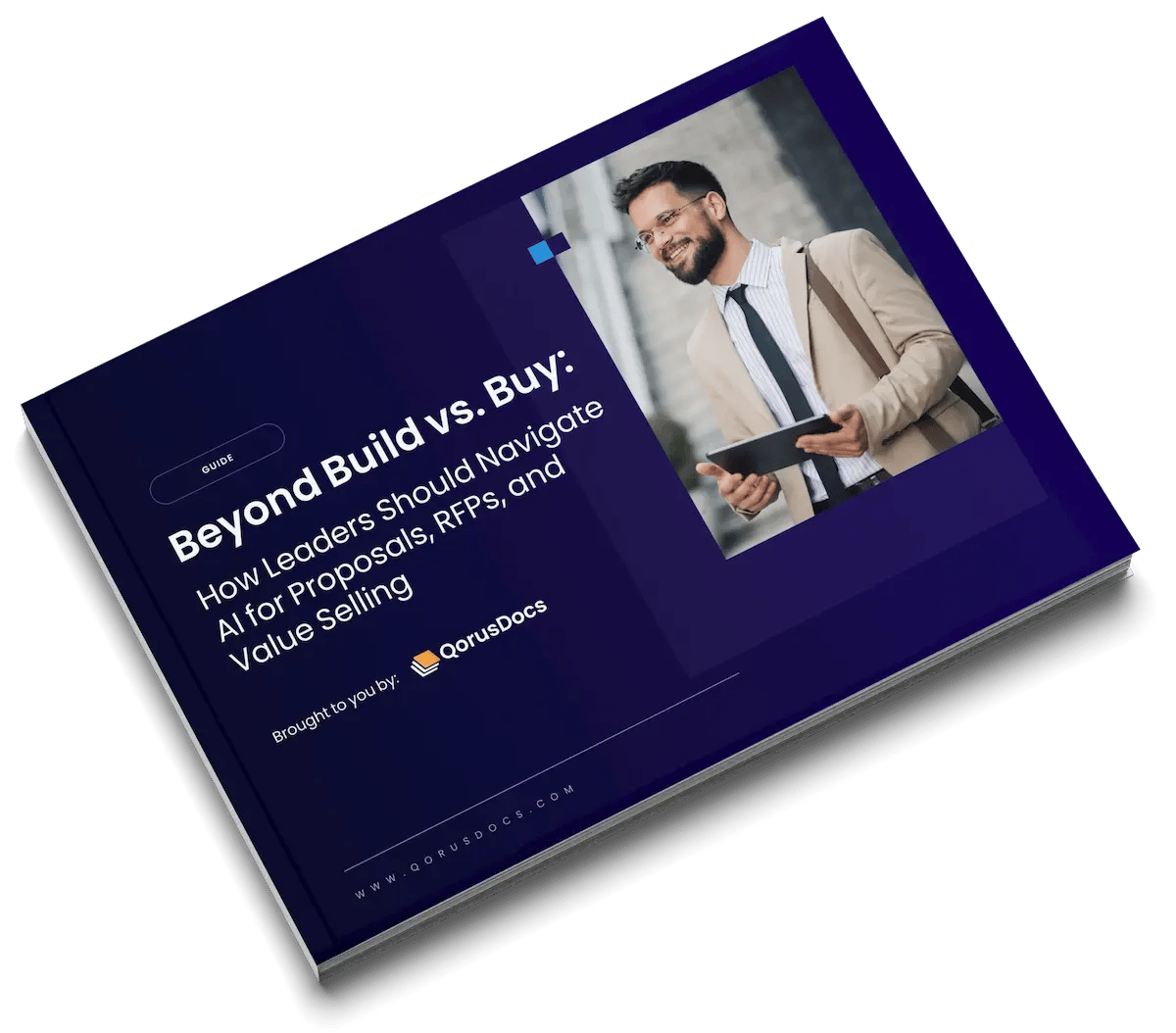
The conversation moves from a binary “buy or build” to a leadership decision that centers around ownership, risk and governance. That’s why we created our new guide: Beyond Build Vs. Buy: How Leaders Should Navigate AI For Proposals, RFPs, And Value Selling.
It’s specifically designed to help you decide when to use general AI, when to extend enterprise AI, when to build internally, when to buy a purpose-built platform, and when a connected approach makes the most sense.
Ownership Is a More Complex Decision
One of the most exciting things about AI is how quickly teams can move from idea to prototype. A prompt can draft an RFP answer. A custom agent can summarize a long requirements document. A calculator can turn a few inputs into an ROI story.
That speed is a huge boost. It speeds up everything, from experimentation to testing out new ideas. All the while reducing manual work. However, a working prototype is not the same thing as a reliable business system. Proposals, RFP responses, pitches and pursuit plans involve a plethora of unique and constantly moving factors: approved content, compliance requirements, SME reviews, version control, permissions, buyer context, financial assumptions and auditability. And, that’s why everything just got more complicated.
“AI has made it easier to build something useful, but usefulness is not the same as strategic value. Leaders need to prioritize the work that compounds growth, cut the low-yield activity that drains capacity, and rebuild repeatable workflows where AI can improve speed, quality, and accountability. The winning organizations will not fund every idea equally. They will make explicit Fund, Protect, Reduce, and Stop decisions, then prove the value in terms the CFO can trust.”
Joanne Correia, Info-Tech Research Group
There’s no doubt AI can help, the real question lies in whether your organization is prepared to govern, support, improve, and own the tool over time.
The Core Business Test
The guide introduces a simple litmus test for AI build-versus-buy decisions:
Is this capability core to how your business competes and wins?
-
If the capability is proprietary, strategically important, and central to competitive advantage, building internally may deserve serious consideration.
-
If the capability supports the business but does not define it, leaders should be more cautious.
Take, for example, law firms. They compete on legal expertise, client counsel and matter outcomes. Of course, creating the right pitch and value story matter enormously as these activities drive revenue. Yet building and maintaining custom proposal or value-selling software isn’t a source of differentiation within the legal landscape.
Internal builds have been known to slowly turning into long-term projects. Beyond the initial build itself, they require ongoing governance, integrations, support, security, maintenance, and ongoing upgrades. And, as a result, they pull away the attention of already overstretched IT, data, and AI teams.
Beware The Prototype Trap
So, why go down that path? This is where organizations can get caught in “the prototype trap.” AI makes the first experimental version of a prototype seem deceptively easy. The end result can polished and reduce manual work, but decision makers need to ask harder questions before turning an experiment into an internal tool:
-
Is the content approved?
-
Are the claims current and compliant?
-
Can SMEs review the response without creating a new bottleneck?
-
Who owns the tool when the model changes?
-
Who updates it when the business changes?
-
What happens when the person who built it moves on?
These questions aren’t intended to slow valuable innovation. They need to be asked in order to help teams separate useful experimentation from bigger technology ownership decisions. A prototype can show what might be possible, but that doesn’t prove that the organization should build and own system.
Where General AI Fits
General AI tools can be extremely useful for proposal and revenue teams. They can help summarize RFPs, draft early responses, brainstorm win themes, research industries, compare messaging options, and speed up everyday writing and analysis.
Used well, they can remove a lot of the hassle from early-stage work. No one needs to hand-type their way through every blank page like it’s 2007 all over again. But you need to keep in mind that general AI is best suited to work that is exploratory, individual, and easy to review.
Once the work becomes repeatable, team-based, compliance-sensitive or buyer-facing, the requirements change. In this scenario, there must be structure around content, permissions are critical to compliance, and other factors like workflow, integrations, and measurement need to be taken into account.
Why Purpose-Built Platforms Still Matter
Purpose-built platforms are designed for these types of governed, repeatable revenue workflows. The platform enables teams to manage approved content, route SME reviews, track versions and connect to other internal systems. These types of capabilities ensure consistent outputs across proposals, RFPs, pitches, and business cases.
Purpose-built doesn’t mean “rigid.” The strongest platforms provide a proven foundation while still allowing organizations to apply their own content, data, ways of working and industry-specific logic.
Download The Guide
Download Beyond Build Vs. Buy: How Leaders Should Navigate AI For Proposals, RFPs, And Value Selling to explore:
-
When to use, extend, build, buy, or blend
-
How to apply the core business test
-
Why prototypes can create hidden ownership risks
-
What costs internal builds often underestimate
-
How purpose-built platforms support governed revenue workflows
-
The final checklist business and IT leaders can use before making the call
If your team is exploring AI for proposals, RFPs, pitches, or value selling, this guide will help you make the decision with more clarity, less noise, and fewer expensive side quests. Download the guide today.
- Guide
Beyond Build Vs. Buy: How to Make Smarter AI Decisions For Proposals And RFPs