

IT & SaaS Proposal Trends: 7 Insights for 2026 from the 10th Annual Benchmark Report
Technology deals rarely stall all at once. The slowdown comes in dribs and drabs: a proposal waiting on pricing, an SOW delayed because of another review, or legal wanting the scope tightened before anything goes out. Individually, each delay looks minor. But for managed IT services providers, they add up fast and hit the bottom line directly.
Every proposal, RFP response, and SOW depends on input from people who are already busy delivering client work. SMEs from sales, delivery, finance, and security all have their own priorities pulling them in different directions, too. Because these documents shape how fast deals are won, they need to be treated as a priority.
The good news is that it doesn’t have to stay this way. Most proposal and SOW delays aren’t caused by a lack of talent or effort, but rather processes that weren’t designed for today’s deal complexity. Let’s explore some of the root causes for delays and dig into some practical strategies to help teams move deals forward faster and with less risk.
Why Managed IT Services Deals Are Getting More Complex
Managed IT services used to be simple to package: define a support model, list covered services, set response times, and you're done. That's no longer how these deals work.
Part of the shift is consolidation. Buyers want fewer vendors doing more; one managed services relationship now often has to cover ground that used to be split across three or four specialists. That's why today's proposals often must address cybersecurity, cloud management, infrastructure, endpoint services, compliance, backup, disaster recovery, Microsoft 365 management, service desk coverage, onboarding, integrations, reporting, and governance. Sometimes all in the same document.
The buying committee has grown to match. It now often includes stakeholders from IT, finance, procurement, security, and senior executives — each with a different definition of what makes a proposal "good." That's a heavier documentation burden than most teams are built for: the proposal has to appeal to every one of those stakeholders and prove real value, while the SOW has to define the work with precision. Both have to protect the business while keeping the deal moving.
What the Data Says About Proposal Pressure on IT Teams
The 10th Annual Proposal Management Benchmark puts numbers behind the pressure IT and SaaS teams feel.
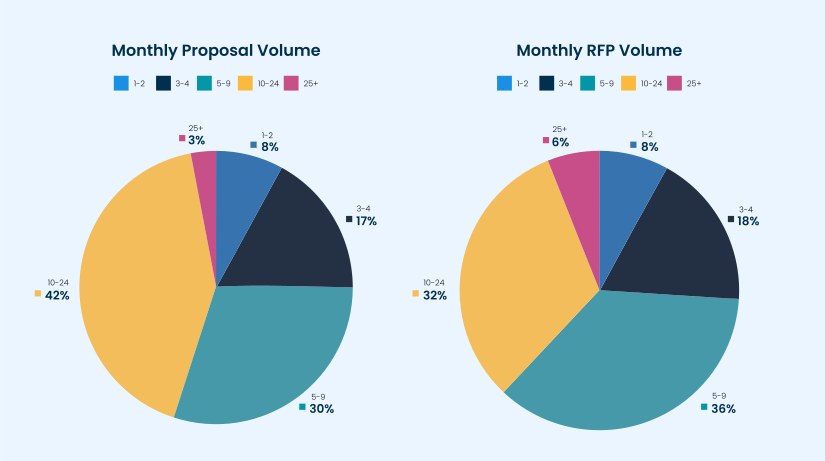
Volume is high: 42% of IT/SaaS respondents handle 10–24 proactive proposals a month, and RFP volume runs similarly heavy, with 36% managing 5–9 RFPs monthly, and another 32% handling 10–24.
Turnaround is slow: 76% say responses take more than six days, with 67% landing in the 6–10 day range and 9% taking 11+ days.
For managed IT providers, the slow turnaround makes sense; a response usually needs technical validation, pricing review, security language, and executive sign-off, not just a run past the sales team. The issue isn't that teams work slowly. It's that too much of the process still runs on manual coordination.
What Makes SOWs the Bottleneck in IT Services Deals?
The SOW has to translate the promise of the proposal into something deliverable: what's included, what's excluded, who owns what, how success gets measured, and what happens when things change.
An SOW that’s vague or too open-ended creates risk. An overly complex one slows the buyer down. And if it’s built from outdated information, it can carry the wrong terms, service levels, or pricing. Or, if you have to rebuild the SOW from scratch every time, it quietly drains hours from sales, delivery and operations.
And there’s another issue: SOW delays usually hit late in the deal, after the buyer is already engaged and momentum matters most. A two-day delay might feel minor internally, but to the buyer it can feel like cold feet. And hesitation gives competitors an opening to step back in.
Proposal Delays Have Real Revenue Consequences
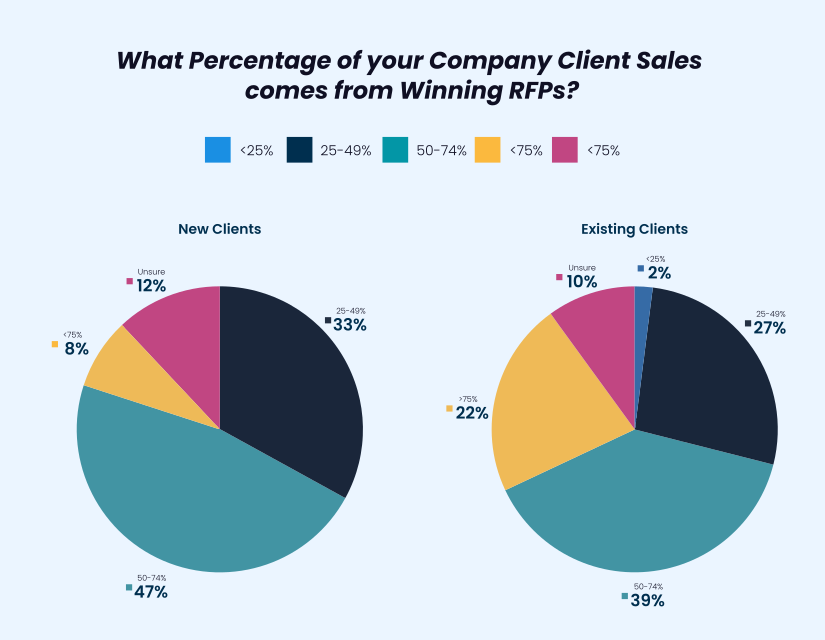
For IT and SaaS companies, proposals are directly tied to revenue. Over half (55%) of respondents say half or more of new business revenue comes from RFP wins, and 61% say the same is true for existing-client revenue from competitive RFPs.
That tracks with how managed IT growth actually happens, through new logos and through expansion into cybersecurity, cloud migration, compliance, backup, or strategic consulting within existing accounts. Each of those expansions usually needs its own proposal, SOW, or pricing package. When proposal and SOW work slows down, revenue slows with it. And often, leadership doesn’t have the visibility to see where the deal is stuck.
Scope Risk: The Other Side of the Speed Problem
Moving fast only helps if the SOW is accurate. If an SOW is poorly written and leaves too much room for interpretation or misses assumptions, it can cause damage long after it’s been signed. That's how scope creep starts. And it rarely stops there: margins erode, delivery gets strained, and clients get frustrated.
Proposal automation shouldn't be about pushing documents out faster at any cost. With a platform that offers approved language, current service descriptions, accurate pricing, and consistent reviews, you can achieve the goal of working faster with better control. The buyer gets clarity, and the provider avoids making accidental promises.
SME Availability is the Real Bottleneck
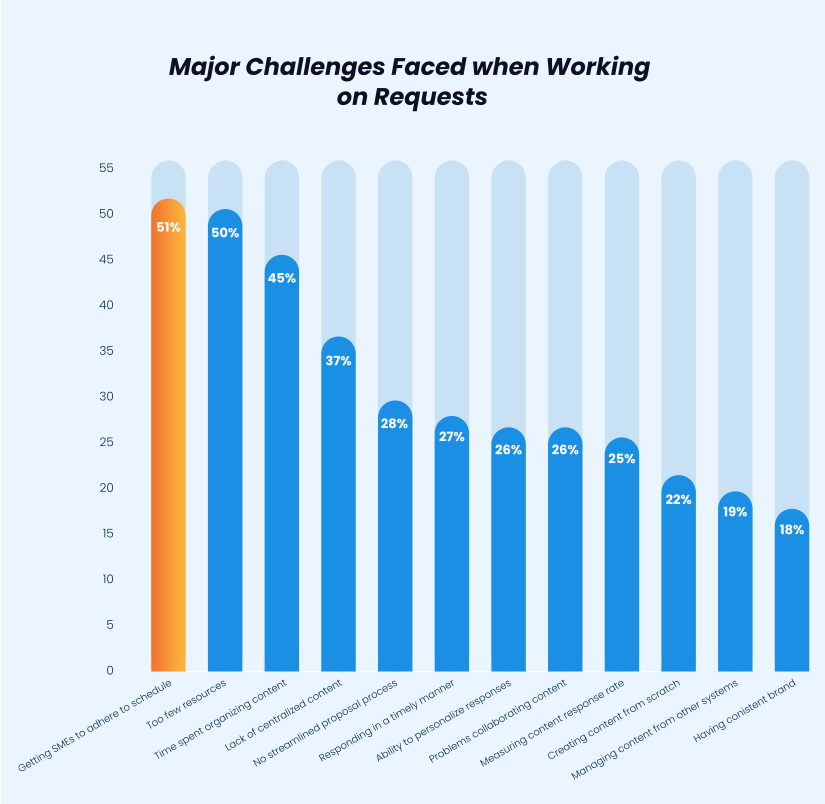
The data is clear: proposal work depends on subject matter experts, and SMEs are stretched thin. Over half (51%) of IT/SaaS respondents say it's hard to get timely SME input, and 50% say they simply don't have enough resources for the volume.
Whether you’re waiting for a technical answer on endpoint management or for security to sign off on compliance language, a simple delay creates a domino effect. When SME requests live in email threads, chat messages, and someone’s memory, delays stop being the exception and start being the norm.
Larger Contributor Networks Make the Process Harder to Manage
Proposal and SOW creation is now a team sport, especially in technology.
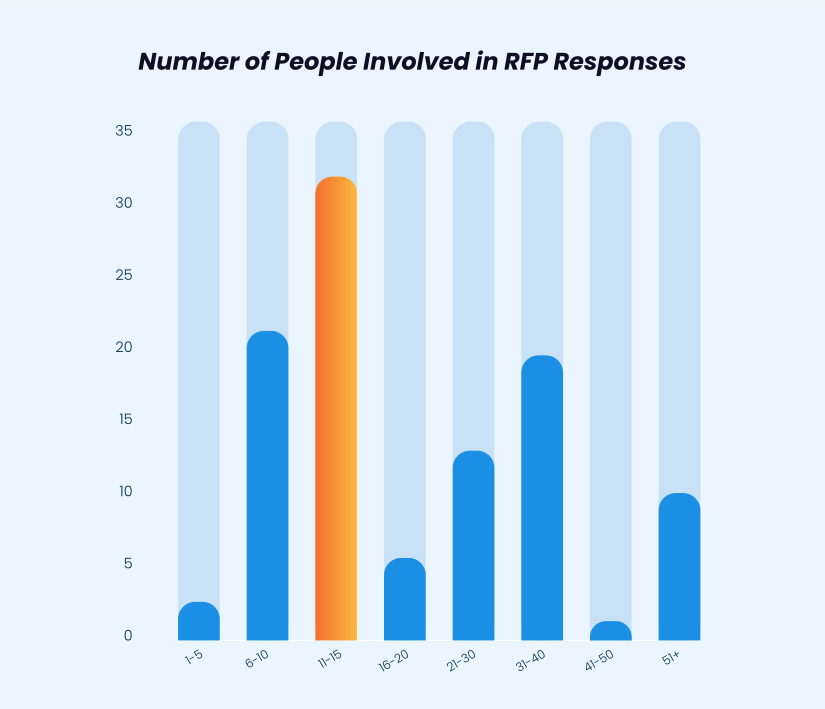
The benchmark shows that IT and SaaS proposal teams often involve large contributor groups. Only 2% of respondents involve five or fewer contributors in the response process. Meanwhile, 21% involve 6 to 10 contributors, 31% involve 11 to 15, and 18% report participation from 31 to 40 stakeholders.
That is a lot of people for one document.
In managed IT services, this is understandable as a single deal may require input from sales, account management, solution architects, service delivery, security, finance, legal, and executives. Each group has valid concerns. Each group also has its own priorities, terminology, and definition of “almost done.”
Without a structured process, the proposal manager or sales lead becomes the human routing system. They chase answers, compare versions, paste content, check formatting, follow up on approvals, and try to remember which comments were final. That kind of work is exhausting, and it does not scale.
Traditional Tools Were Not Built for This Much Complexity
Most IT and SaaS teams still rely on familiar tools to create proposals. According to the benchmark, 60% use Microsoft Word as their primary proposal application. Another 15% rely on web-based tools, 11% use Excel, and 5% primarily use PowerPoint.
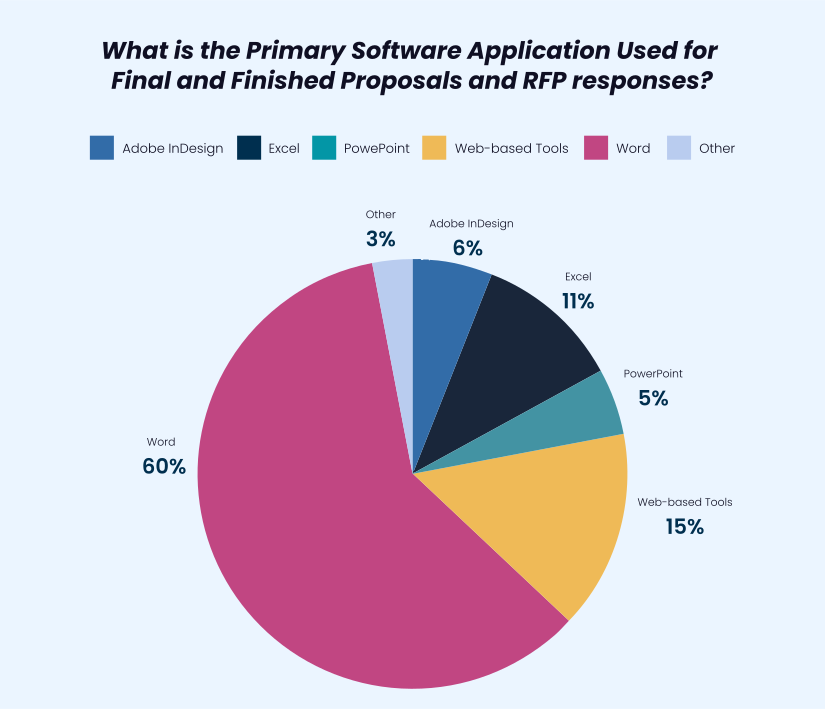
There is nothing wrong with Word, Excel, or PowerPoint. In fact, for many business documents, they are exactly where teams want to work.
The problem is that document creation is only one part of the process.
Managed IT services teams also need content governance, version control, workflow, SME collaboration, pricing consistency, template management, clause control, and visibility into where each document stands.
The tools themselves aren’t the problem, the process built around them is. Teams need a way to create polished, client-ready documents while also managing the content, approvals, and collaboration behind them.
Proposal Automation Helps Remove Delays Without Removing Control
This is where proposal automation becomes valuable for managed IT services providers. Done well, it cuts the repetitive manual work that slows sales, delivery, legal, and technical teams down, while leaving their judgment fully in place.
A strong proposal automation process can help teams:
- Build proposals and SOWs from approved templates
- Reuse current service descriptions, security language, and implementation content
- Route sections to the right reviewers
- Reduce dependency on ad-hoc SME input
- Keep pricing, scope, assumptions, and exclusions consistent
- Improve visibility into document status
- Support faster turnaround without losing governance
For managed IT services, this is especially useful because many deals contain repeatable building blocks. Service desk packages, cybersecurity offerings, Microsoft 365 support, cloud services, backup and recovery, onboarding plans, SLAs, and reporting commitments often follow defined patterns.
Those patterns should not have to be recreated every time. When the right content is easy to find and safely reusable, teams can spend more time tailoring the story to the client and less time hunting through old documents.
What This Means for Managed IT Services Leaders
Revenue depends on winning competitive bids. For managed IT services providers, proposal and SOW delays impact not only operations but also the bottom line.
Manual operations reveal a trickledown effect: sales waits on input, delivery gets pulled in too late to protect scope, SMEs re-answer the same questions, and leaders lose visibility into where revenue is stuck.
Making the process easier to run is really what’s needed. That means standardizing repeatable content, improving collaboration, using approved templates, and giving teams a faster way to create accurate, high-quality proposals and SOWs.
When that happens, proposal work becomes less of a bottleneck and more of a revenue advantage.
Managed IT services deals will always require expertise, careful scoping, and multiple stakeholders. That complexity is part of the business. But the process built around it can be a lot smarter.
Want the Full Data Behind These Trends?
Download the 10th Annual Proposal Management Benchmark to explore detailed research on proposal volumes, win rates, team structures, and operational challenges across IT, SaaS, and other industries.
If you would like to see how QorusDocs helps managed IT services teams create proposals, RFP responses, and SOWs faster while keeping content accurate and controlled, let’s start a conversation.